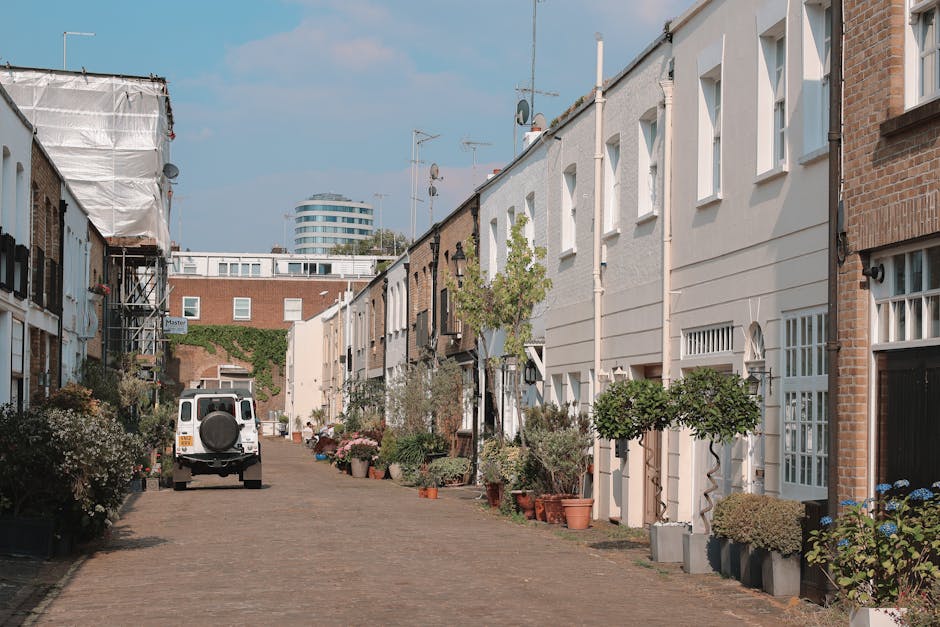
Pembridge Villas Notting Hill Garden Maintenance Case Study
Garden care in Pembridge Villas, Notting Hill is rarely just about "keeping it tidy". It is about working with limited access, mature planting, neighbourly sightlines, changing light, and the steady pressure that London weather puts on every border, hedge, and lawn. This Pembridge Villas Notting Hill garden maintenance case study looks at the practical side of that reality: what a good maintenance plan needs to do, why it matters in a dense residential setting, and how a well-run service keeps a garden healthy without turning the place upside down.
If you are a homeowner, landlord, managing agent, or simply someone trying to get a neglected outdoor space back under control, you will probably recognise the same pattern: the garden looks fine from a distance, but up close it needs a proper system. Not a heroic one-off. A system. And truth be told, that is where many gardens go wrong.
For readers who want the broader service picture, it can help to review the provider's services overview and the specific approach described on the garden maintenance page. If the site has become overgrown first, garden clearance may be the right starting point before routine upkeep begins.
Contents
- Why Pembridge Villas Notting Hill garden maintenance case study Matters
- How Pembridge Villas Notting Hill garden maintenance case study Works
- Key Benefits and Practical Advantages
- Who This Is For and When It Makes Sense
- Step-by-Step Guidance
- Expert Tips for Better Results
- Common Mistakes to Avoid
- Tools, Resources and Recommendations
- Law, Compliance, Standards, or Best Practice
- Options, Methods, or Comparison Table
- Case Study or Real-World Example
- Practical Checklist
- Conclusion
- Frequently Asked Questions
Why Pembridge Villas Notting Hill garden maintenance case study Matters
In an area like Pembridge Villas, a garden can be part private retreat, part visual frontage, and part working surface. That mix matters. A neglected terrace, a tired lawn, or an untrimmed hedge does not just look untidy; it can affect light, drainage, privacy, and the overall feel of the property. In a neighbourhood where outdoor space is often precious and compact, small issues become obvious quickly.
This is why a case study approach is useful. It forces you to look at the garden as a living system rather than a collection of jobs. What needs regular attention? What can wait? What needs a seasonal cutback? Which parts of the space are struggling because of shade, foot traffic, or soil compaction? Once you ask those questions, the work becomes more strategic and much less reactive.
There is also a practical local dimension. Notting Hill gardens often sit behind period homes, basement flats, or narrow access routes. That means maintenance has to be planned around delivery access, neighbours, bins, and the general fact that nobody enjoys a loud, chaotic morning outside their window. Let's face it, a tidy result matters, but so does how the job is carried out.
If the garden includes steps, a timber platform, or a raised seating area, it may be worth coordinating with decking services or broader landscaping support. Maintenance is much easier when the hard surfaces and planting areas work together instead of fighting each other.
How Pembridge Villas Notting Hill garden maintenance case study Works
A proper garden maintenance programme usually starts with observation. Not dramatic. Just careful. A professional will look at lawn condition, hedge shape, weed pressure, pruning needs, seasonal growth, and any signs of stress like yellowing leaves, bare patches, or compacted soil. In a tight urban setting, they also check how the garden is used: is it a family space, a quiet courtyard, a rental property, or a front garden that needs to keep its shape all year?
From there, maintenance is split into repeating tasks and occasional interventions. Repeating tasks keep the garden stable. Occasional interventions reset problem areas. That might mean cutting back a hedge harder than usual, clearing debris after a windy spell, or thinning an overgrown shrub border so light can reach the lower growth again.
For many Pembridge Villas properties, the rhythm is the important part. A monthly or fortnightly visit is often more effective than waiting for the garden to look "bad enough" to deal with. Gardens respond better to small, consistent corrections. You can see the difference after just a few cycles: cleaner edges, healthier growth, less waste, fewer surprise jobs.
The work may combine lawn mowing, hedge trimming, deadheading, weeding, border tidying, leaf removal, light pruning, and general waste collection. If overgrowth has started to block paths or swallow planting beds, then a one-off reset through garden clearance can be the cleanest way to restore control.
Key Benefits and Practical Advantages
The obvious benefit is appearance. A well-maintained garden simply feels better to use. But that is only the surface of it. Good maintenance protects plant health, reduces long-term repair work, and makes the property easier to manage overall. In London, where outside space can be squeezed and expensive to create, keeping what you already have in good shape is a fairly sensible investment.
- Better plant health: regular pruning, feeding, and weed control reduce stress on trees, shrubs, and seasonal planting.
- Improved usability: paths, seating areas, and lawns stay usable rather than becoming cluttered or slippery.
- Sharper presentation: edges, hedges, and beds stay crisp, which makes the whole property feel looked after.
- Lower risk of bigger jobs: small issues are easier to manage than full-scale overgrowth.
- Predictable upkeep: planned maintenance is usually easier to budget and schedule than emergency calls.
There is a quieter benefit too: peace of mind. A lot of property owners do not want to think about the garden every week. Fair enough. A reliable maintenance plan removes that mental clutter. The space just works.
Where sustainability matters, it is sensible to ask how green waste is handled and whether routine work supports better recycling practices. You can also review the provider's approach to recycling and sustainability, especially if you want pruning waste, clippings, and cuttings managed responsibly.
Who This Is For and When It Makes Sense
This kind of maintenance is not only for large gardens or high-end homes. In fact, smaller spaces often benefit the most because they show neglect faster. A modest courtyard, a basement garden, or a front planting strip can slide from "fine" to "messy" surprisingly quickly.
It makes particular sense for:
- homeowners who want a consistently tidy garden without doing the work themselves
- landlords preparing a property for viewings or tenant turnover
- managing agents overseeing shared outdoor areas
- busy families who need the garden to be safe and usable
- older properties with mature planting that needs careful handling
- anyone returning from a period of neglect and unsure where to start
There is also a timing question. If the garden is already out of control, start with a reset. If it is mostly healthy but just drifting, move straight to a maintenance schedule. If you are not sure which camp you are in, that is normal. Most people are not garden diagnosticians on a Tuesday afternoon. A brief assessment usually clears things up quickly.
In some cases, maintenance may need to be paired with broader landscape gardening or targeted tree work. If branches are shading the space too heavily or creating safety concerns, tree lopping and removal may be relevant, though only where genuinely needed and handled with care.
Step-by-Step Guidance
A sound process keeps maintenance efficient. Rushing in with cutters and a bin bag usually means more tidying later. Better to work through the garden in a clear order.
- Assess the space. Check access, plant condition, lawn health, hedge lines, and problem areas such as shaded patches or hard-to-reach corners.
- Prioritise safety and access. Move loose items, identify slippery surfaces, and make sure tools and waste routes will not block neighbours or entrances.
- Clear obvious debris first. Remove fallen leaves, dead stems, broken branches, and any litter so you can see the structure of the garden.
- Deal with overgrowth. Cut back hedges, control creepers, and reduce growth that is hiding planting beds or crowding pathways.
- Maintain the lawn. Mow at the right height, edge the borders, and avoid cutting too much at once, especially after dry spells.
- Weed and tidy beds. Pull weeds before they seed, then mulch or lightly top-dress where appropriate.
- Prune selectively. Shape shrubs and small trees with purpose; do not overcut for the sake of a neat moment.
- Finish with waste removal. Bag or remove clippings so the garden is left genuinely ready to use.
- Review the result. Look at the space from the house, from the path, and from any neighbour-facing angle. That final check matters more than people think.
A useful rule of thumb: if the garden looks "done" from one angle but unfinished from another, it is not finished yet. Slightly annoying, yes. Also true.
Expert Tips for Better Results
In our experience, the best garden maintenance plans are boring in the best possible way. They are steady, predictable, and adjusted to the season. No drama. No guesswork. Just enough attention at the right time.
Tip 1: Work with the garden's growth pattern, not against it. Heavy cutting at the wrong time can create more regrowth than control. Seasonal timing matters, especially for hedges and flowering shrubs.
Tip 2: Keep edges sharp. A well-edged lawn or border makes a space feel intentional even when the planting is simple. It is a small job with outsized impact.
Tip 3: Do not ignore shade. Many Notting Hill gardens struggle because mature trees, walls, or neighbouring buildings reduce light. In shade, lawn care and plant choice need a different approach. Otherwise you end up feeding a losing battle.
Tip 4: Match the maintenance schedule to the use of the space. A family garden used daily will need more frequent attention than a decorative courtyard. Obvious, perhaps, but easy to miss when budgets are tight.
Tip 5: Keep records. A simple note of what was pruned, mown, fed, or replaced helps future visits go faster and keeps the plan consistent.
Tip 6: Plan for small seasonal surprises. One windy week, a sudden flush of growth, or a wet spell can change the workload fast. A flexible maintenance routine absorbs those changes without panic.
Common Mistakes to Avoid
Most garden problems are not dramatic failures. They are accumulation. A bit of missed weeding, a hedge left too long, a lawn cut too short, and suddenly the whole space feels harder to manage. It sneaks up on you.
- Cutting too much at once: especially on hedges and shrubs, this can stress the plant and leave ugly, thin regrowth.
- Ignoring drainage issues: patchy turf or damp corners are often a sign of a deeper problem, not just "bad luck".
- Using the wrong mowing height: mowing too low weakens grass, particularly in sun or dry weather.
- Letting clippings sit too long: this can smother grass, invite pests, and make the area feel untidy fast.
- Forgetting access routes: narrow passageways, cellar steps, and side returns are where garden jobs become awkward if not planned properly.
- Overlooking neighbour impact: noise, debris, and overspray all matter in dense residential streets.
Another common mistake is treating every problem as a maintenance issue. Sometimes the answer is maintenance. Sometimes it is a bigger fix, such as soil improvement, planting changes, or a redesign of the awkward corner no one uses. Knowing the difference saves time and money.
Tools, Resources and Recommendations
For routine garden upkeep, the right tools do not need to be extravagant. They just need to be reliable, sharp, and suited to the size of the site. In a compact Pembridge Villas garden, nimble tools often beat bulky ones.
| Task | Useful approach | Why it helps |
|---|---|---|
| Lawn care | Sharp mower, edging tool, and a schedule based on growth | Keeps the lawn even and avoids scalp damage |
| Hedge shaping | Manual or powered trimmers used in small passes | Improves control and reduces torn growth |
| Border tidy-up | Hand weeding, light hoeing, and selective mulching | Less root disturbance, cleaner finish |
| Debris removal | Rakes, bags, and a clear waste plan | Leaves the site tidy and easier to inspect |
| Access-sensitive work | Compact kit and careful staging | Reduces disruption in narrow or shared spaces |
If you are comparing service options, a brief look at pricing and quotes can help you understand how scope affects cost. The important thing is not to chase the lowest number. It is to match the service to the actual condition of the garden. Cheap and incomplete can become expensive quite quickly, which is not exactly a thrill.
For service reliability and peace of mind, it also helps to understand how a provider approaches insurance and safety and what their health and safety policy says about work practices on site. Those details matter more than many people realise.
Law, Compliance, Standards, or Best Practice
Garden maintenance is not usually a heavily regulated topic in the way construction or specialist arboriculture can be, but best practice still matters. Professional work should be carried out with reasonable care for people, property, and the surrounding environment. That means sensible tool use, proper waste handling, and attention to safe access.
For shared buildings, leasehold properties, and managed residential spaces, the practical expectation is simple: work should be scheduled cleanly, communicated properly, and carried out without creating avoidable nuisance. Noise, debris, blocked passageways, and unsafe cutting practices are all avoidable with a decent process.
Where trees are involved, caution matters even more. Any significant pruning or removal work should be considered carefully, especially around bird nesting periods, protected trees, or structural concerns. Not every branch issue means a tree needs major intervention. Often, it does not.
Waste handling should also be thoughtful. Green waste, branches, and clippings should be removed or recycled in a way that fits local expectations and the provider's own environmental practice. If sustainability is important to you, ask about it early rather than as an afterthought.
For the reader, the best rule is straightforward: look for a provider that works neatly, communicates clearly, and explains what they are doing. Good practice is usually visible before it is advertised.
Options, Methods, or Comparison Table
Different gardens need different approaches. A maintenance-only plan works well when the structure is already sound. A clearance-led approach is better when the garden has slipped. And a combined maintenance-and-landscaping approach makes sense when the space needs functional improvement, not just tidying.
| Approach | Best for | Main advantage | Possible drawback |
|---|---|---|---|
| Routine maintenance | Gardens already in decent condition | Stable, predictable upkeep | Won't solve deep neglect |
| Garden clearance first | Overgrown or cluttered spaces | Fast reset and clearer structure | May need follow-up visits |
| Maintenance plus landscaping | Spaces needing practical improvement | Better layout and easier long-term care | More planning needed |
| Targeted hedge/tree work | Where shade, bulk, or height is an issue | Restores light and shape | Must be judged carefully |
For many properties, the smart route is a combination. Clear, then maintain. Adjust the structure if needed. Keep it realistic. That is usually where the long-term win lives.
Case Study or Real-World Example
The Pembridge Villas Notting Hill garden maintenance case study is best understood as a typical urban-garden scenario rather than a dramatic makeover. Picture a rear garden that had drifted over several months: the lawn had become patchy, a hedge line was losing shape, borders were cluttered with weeds, and fallen material had started to collect in the quieter corners. Nothing extreme. Just enough to make the space feel tired every time the doors opened.
The first stage would be a tidy assessment and, if needed, a reset. That could mean removing debris, clearing dead growth, cutting back the most overgrown sections, and identifying which parts of the garden were simply in need of regular attention rather than replacement. Then a maintenance rhythm would begin: mowing, edging, border weed control, hedge shaping, and seasonal pruning as required.
What tends to change most in these situations is not just the look of the garden but the experience of it. The space becomes usable again. Light reaches the lower planting. The path feels safer underfoot. The sound of the mower no longer comes with the emotional weight of "oh no, this has got bad again". A small thing, maybe, but very real.
In a more detailed project, the plan might also include a better planting structure or a low-maintenance layout adjustment through landscape gardening. If the garden had awkward edges or worn surfaces, landscaping could be used to reduce future maintenance friction. The point is not to overcomplicate the space. It is to make it easier to live with.
Practical Checklist
Use this as a quick sense-check before booking or scheduling a maintenance visit:
- Is the garden mostly tidy, or does it need a reset first?
- Are lawns, hedges, and borders all part of the job, or only one area?
- Is there easy access for tools, waste removal, and safe movement?
- Do any areas need extra care because of shade, pets, children, or drainage?
- Is the work seasonal, one-off, or part of a regular cycle?
- Do you need clearance, maintenance, or both?
- Are hard surfaces, decking, or edging also affecting the final result?
- Has waste handling been discussed clearly?
- Are safety, insurance, and communication standards clear?
- Do you know what "success" looks like after the first visit?
One simple habit helps a lot: take a few photos before the work begins. It gives you a clean reference point, and it makes the improvement easier to judge later on. Nothing fancy. Just practical.
Conclusion
A strong garden maintenance plan in Pembridge Villas is not about chasing perfection. It is about keeping the garden healthy, presentable, and easy to live with in a very real London setting. The best results usually come from steady attention, good timing, and a maintenance strategy that respects both the planting and the property around it.
If the garden is already tidy, routine care will keep it that way. If it has drifted, a clearance-first approach can reset the space. And if the layout is part of the problem, a little thoughtful landscaping can make future upkeep much easier. Simple, really. Not always easy, but simple.
For service details, background, and the next sensible step, you may also want to review about us and the practical information on contact us. If you prefer to understand the full service range first, the services overview is a good place to start.
Get a free quote today and see how much you can save.
And if you are still weighing it up, that is fine too. A well-kept garden rewards patience, and the difference is often felt before it is fully seen.
Frequently Asked Questions
What does a Pembridge Villas Notting Hill garden maintenance case study actually cover?
It usually covers the practical process behind keeping a garden in good condition: assessment, routine upkeep, seasonal tasks, problem areas, and the kind of decision-making that keeps the space manageable over time.
Is garden maintenance enough, or do I need clearance first?
If the garden is lightly overgrown, maintenance may be enough. If weeds, debris, or neglected growth are blocking the structure of the space, garden clearance first is usually the better route.
How often should a Notting Hill garden be maintained?
That depends on the size, planting, and how the garden is used. Many urban gardens benefit from regular visits rather than occasional large jobs, because growth and clutter build up quickly in small spaces.
What is the difference between garden maintenance and landscaping?
Garden maintenance keeps an existing space healthy and tidy. Landscaping changes the structure, layout, or surfaces of the garden to improve how it works and looks.
Can garden maintenance help with a tired-looking lawn?
Yes, but only if the issue is care-related rather than structural. Regular mowing, edging, and sensible seasonal treatment can improve a lawn, though patchy or shaded areas may need a different approach.
What are the biggest risks in urban garden maintenance?
The biggest risks are overcutting, poor access planning, neighbour disruption, and ignoring drainage or shade issues. Small gardens can be more awkward than larger ones because everything is tighter.
Do hedges and shrubs need different care from lawns?
Absolutely. Hedges need shaping and timing, shrubs need selective pruning, and lawns need a mowing pattern that avoids stress. Treating them all the same is a common mistake.
How do I know if my garden needs pruning?
If plants are crossing paths, blocking light, growing unevenly, or losing shape, pruning may be needed. The key is selective trimming rather than cutting hard without a clear reason.
What should I look for in a garden maintenance provider?
Look for clear communication, sensible scheduling, safe working practices, and a practical understanding of what the space actually needs. A tidy quote is good; a tidy process is better.
Is waste removal included in garden maintenance?
It often is, but it should be confirmed in advance. Green waste management is a key part of a proper maintenance visit because leaving debris behind defeats the point a bit.
Can maintenance be combined with hedge trimming or tree work?
Yes, and often that is the most efficient approach. Hedge trimming is a common part of ongoing care, while tree work is only appropriate where there is a real need for it.
What is the best first step if my garden has been neglected?
Start with an honest assessment. Decide whether the garden needs clearance, maintenance, or both. Once the space is reset, regular upkeep becomes much easier to manage.