Garden Maintenance Notting Hill — Recycling and Sustainability
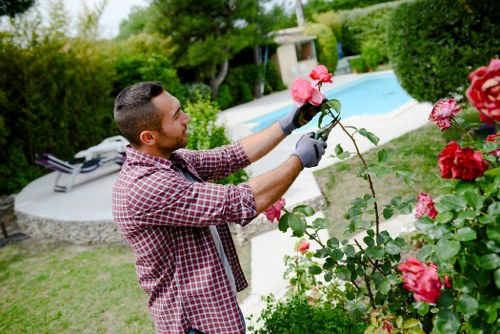 Garden Maintenance Notting Hill takes a practical, neighbourhood-first approach to eco-friendly waste disposal and sustainable rubbish gardening areas. Our mission is simple: reduce landfill, return nutrients to the soil, and keep Notting Hill green for future seasons. We combine careful on-site separation, resource recovery, and low-carbon transport to deliver greener garden care in the heart of West London.
Our sustainability plan for Notting Hill garden maintenance sets a clear, measurable target: we aim for a 75% recycling rate for all garden-related waste streams by the end of the next fiscal year. This target covers green waste, compostable materials, clean timber, concrete and brick rubble from small landscaping jobs, and the majority of packaging or plastics arising from materials we bring on site. To achieve this, we prioritise segregation at source and use local processing where possible.
 On-site sorting is central to our operations. We provide separate containers for:
- Green/organic waste for composting or anaerobic digestion
- Clean wood and untreated timber for chipping and reuse
- Mixed dry recycling (paper, card, cans and rigid plastics) kept clean and dry)
- Soil, stones and inert material set aside for transfer to appropriate depots
Sustainable Rubbish Gardening Area and Local Processing
We work with boroughs' existing approaches to waste separation and complement them with best-practice site management. Both the Royal Borough of Kensington and Chelsea and neighbouring boroughs encourage kerbside separation for food, glass and paper and co-mingled recycling; our crews adhere to these systems, ensuring that material sent to council collection points or transfer stations meets local requirements. Where a council collection is not suitable — for example larger volumes of chipped wood or soil — we use authorised transfer stations and consolidation depots serving the area to keep journeys short and efficient.
Local transfer stations and consolidation centres play a key role in our chain. By routing materials through nearby depots we reduce haulage distance, and increase the chance that green waste is processed locally into compost or biomass fuel rather than being sent long distances. Our operations typically use transfer facilities that serve Kensington, Chelsea and neighbouring Westminster councils, prioritising sites that accept segregated loads to preserve material value.
 Practical recycling activities carried out across Notting Hill projects include:
- Chipping branches and treating them into mulch for reuse on-site or at community gardens
- Composting leaves, prunings and small kitchen garden waste into feedstock for community allotments
- Sorting and collecting clean soil and stones for reuse in foundations or urban landscaping projects
- Recovering clean, reusable paving, bricks and flagstones where possible
Partnerships, Donations and Social Value
We build partnerships with local charities, community gardens and reuse social enterprises to extend the life of materials and create social value. Rather than consigning items to landfill, we offer viable materials — soil, compost, potted plants, undamaged paving slabs and usable tools — to community groups and charities working in the borough. These partnerships are designed to support local food growing projects, community allotments and social enterprises that can repurpose materials into practical benefits for residents.
Our partnership model includes simple steps that make redistribution effective: quality checking items on-site, segregating donations, and delivering small, scheduled loads to community recipients. We track volumes donated and aim for a measurable uplift in reuse each year. These relationships not only divert waste but also build resilience in the local green infrastructure.
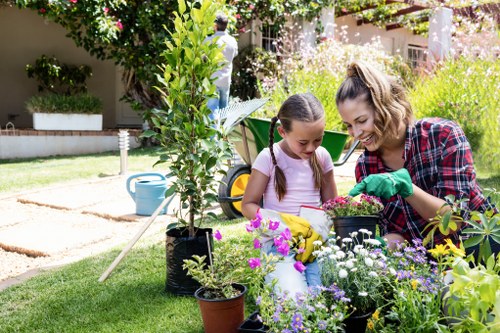 Low-carbon fleet and logistics are another cornerstone. All our vans and small trucks used for garden maintenance in Notting Hill are chosen for low emissions — we favour fully electric vans where operationally feasible and efficient hybrid models for longer or heavier loads. This helps reduce local air pollution and our overall carbon footprint while supporting quieter operations in residential streets.
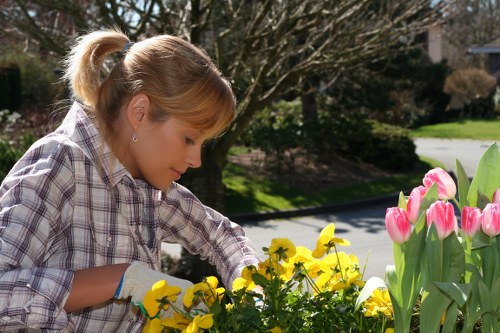 To support a low-carbon approach we coordinate routes to minimise empty running, use consolidated loads when moving material to transfer stations, and time collections to take advantage of off-peak streets where permitted. We also invest in lightweight chippers and electric-powered hand tools where practicable to reduce fuel use on-site. Our environmental reporting covers fuel and electricity use, miles travelled, and waste tonnage diverted from landfill so we can continuously improve.
What you can expect when you choose our sustainable garden maintenance services in Notting Hill:
- Transparent tracking of materials with clear segregation on-site
- Prioritised reuse and donation routes with local charities and community groups
- Routing through local transfer stations to reduce haulage distance
- Low-carbon vans and electric tools to cut emissions in the neighbourhood
- Regular reporting against our 75% recycling target and continuous improvement plans
Our commitment to sustainable rubbish gardening areas and eco-friendly waste disposal is rooted in practical action and local collaboration. Whether you need ongoing garden care in Notting Hill, a one-off clear-out with a focus on reuse, or support making your communal green space more sustainable, our approach is tailored to reduce waste, cut emissions, and keep the community greener. Choose garden care that respects the boroughs' approach to recycling and supports the circular reuse of materials.